MARBL
- Type
- Marketplace0→1
- Link
- getmarbl.com
- Role
- Founding Designer
- Market
- UK
Context
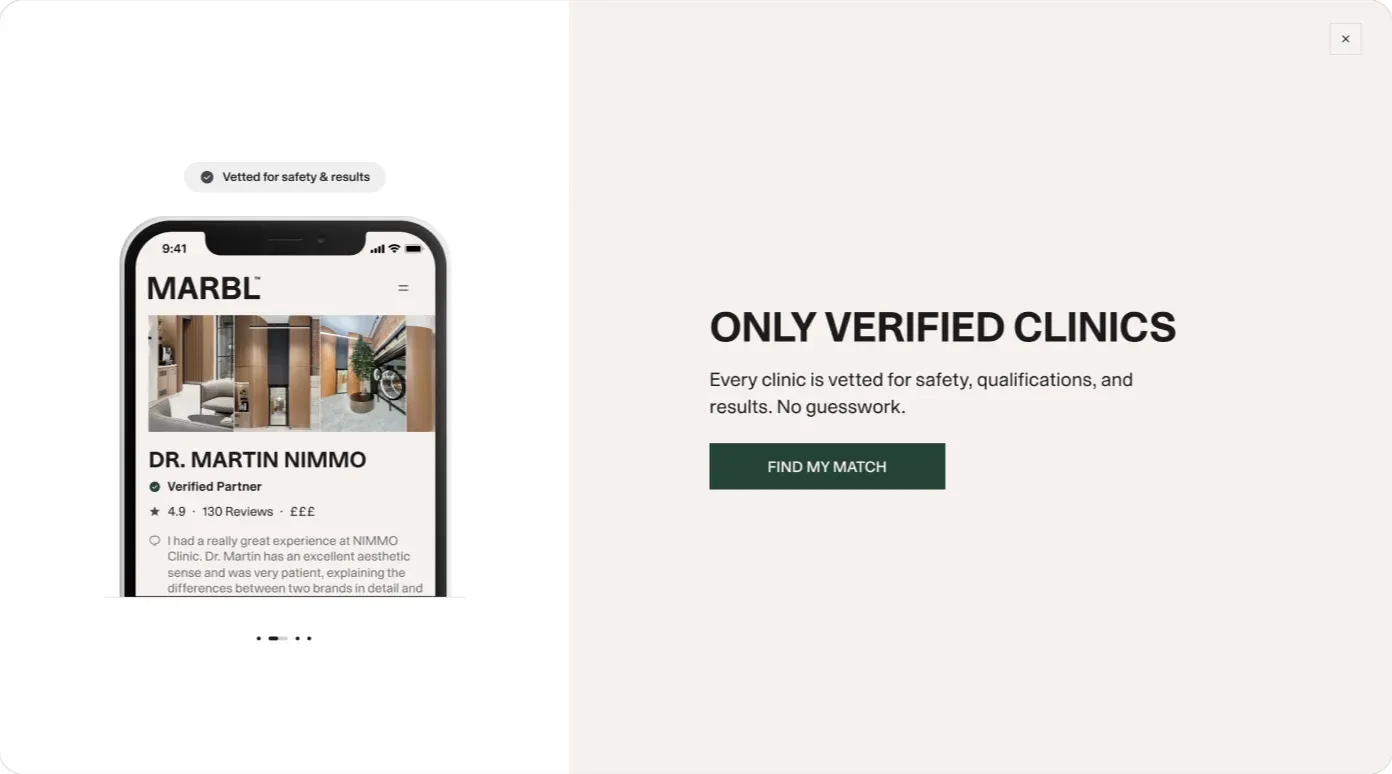
MARBL is a UK marketplace that connects patients with vetted aesthetic clinics. Its core promise is safety and
transparency in a poorly regulated industry: only medically led clinics with an in-house prescriber and a 4.5+
Google rating get listed. As the only designer, I owned all design: product, design systems, marketing and
processes.
Challenges
- A startup needs to build everything from scratch and test ideas fast. All visual work relied on a single designer.
- The search for product-market fit led to a hard pivot: from a B2B product with an AI chatbot to a B2C marketplace, with a new audience and a new visual language.
- People don’t trust a new marketplace with no reviews.
- A service business needs realistic visuals, but traditional photo production is too expensive, too slow and can’t keep up with product changes.
Process
We started with MARBL OS, a B2B platform for clinics with a unified inbox and an AI assistant that turns enquiries
into bookings. Clinics used it, but the AI chat converted worse than expected. So we moved to the marketplace ahead
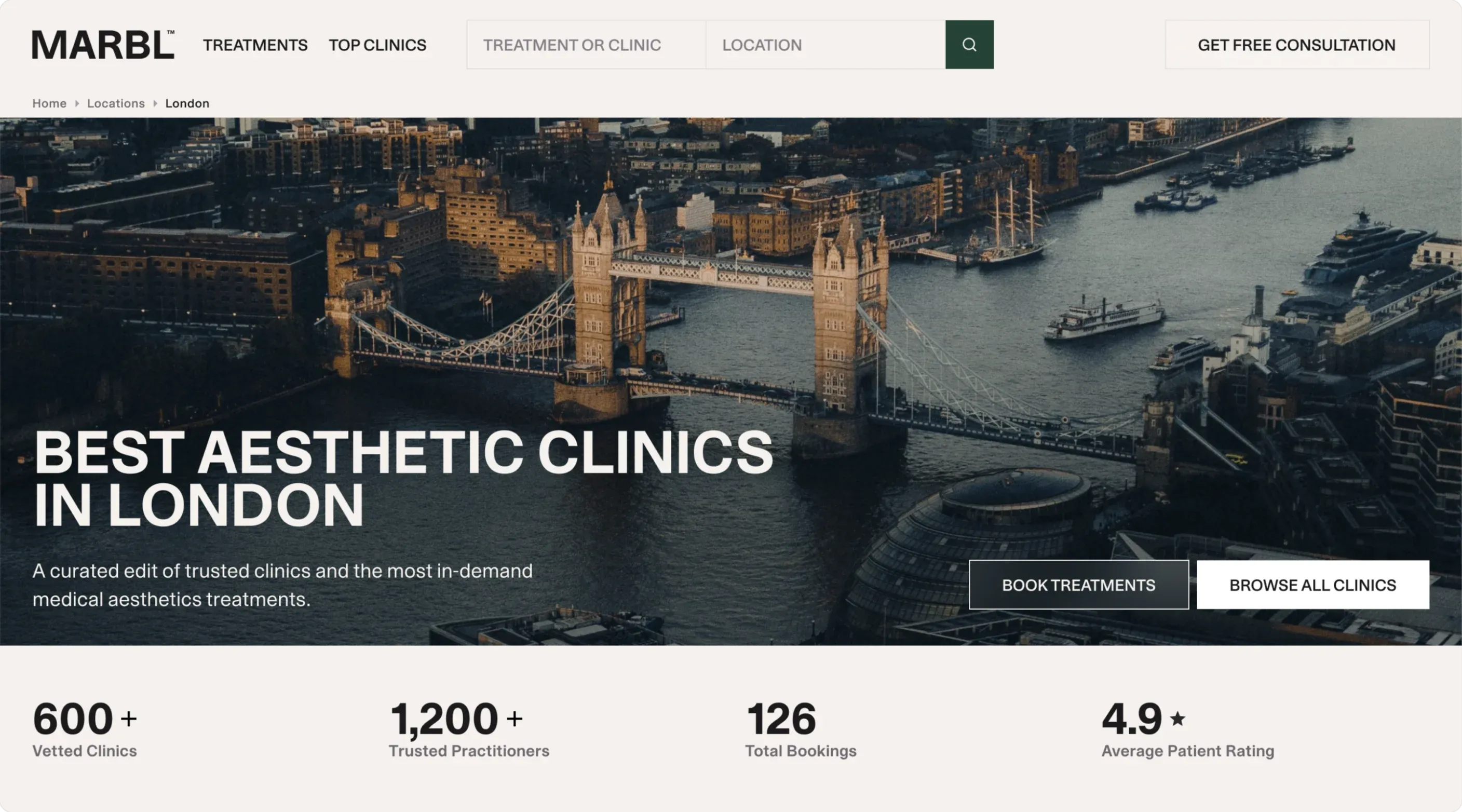
of schedule and put OS on hold. We created the new B2C identity together with an external brand agency, and
I translated it into tokens, components and product screens without slowing down development.
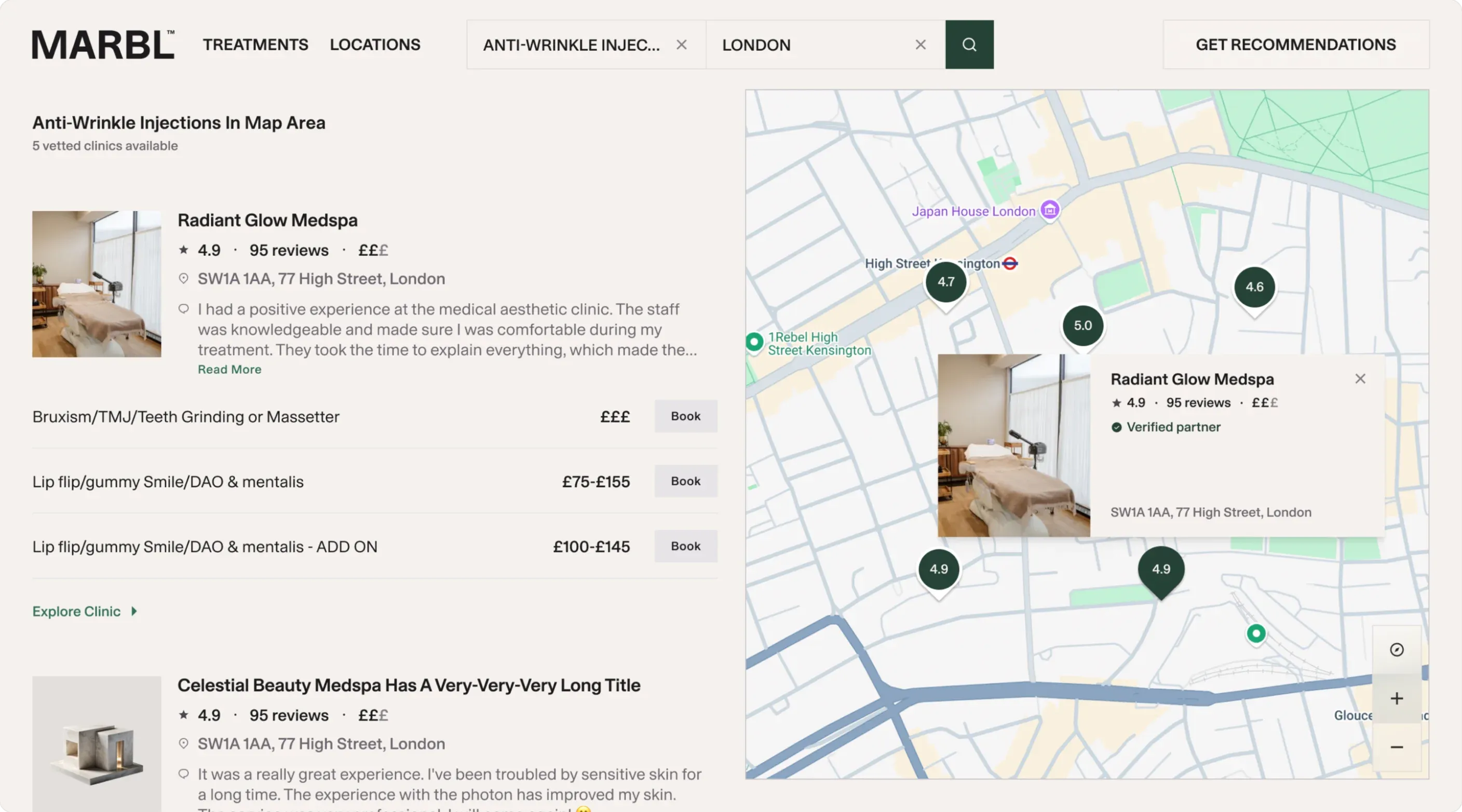
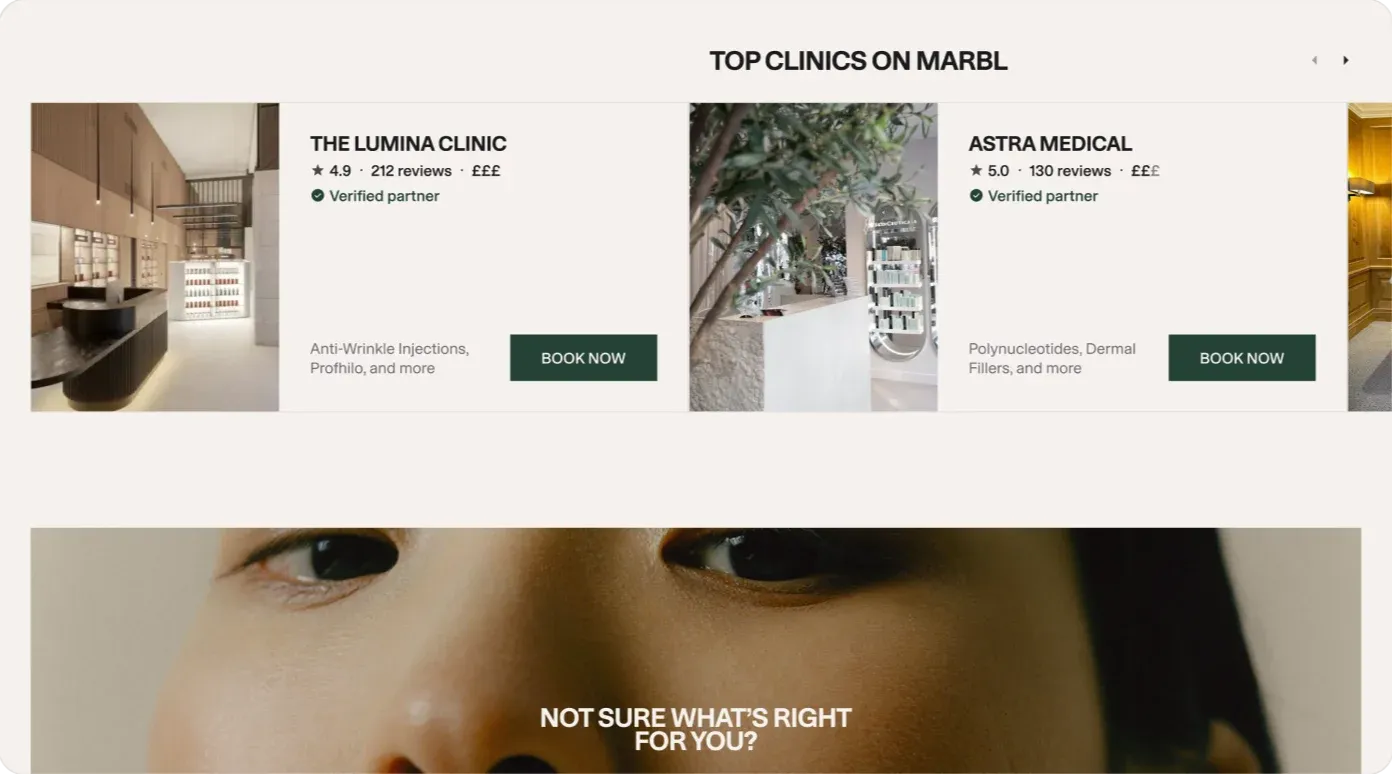
The main challenge for the marketplace was trust. We built a system where any visitor can become a lead in the way
that suits them: browse the catalogue and book online, take a quiz and get a treatment and clinic recommendation,
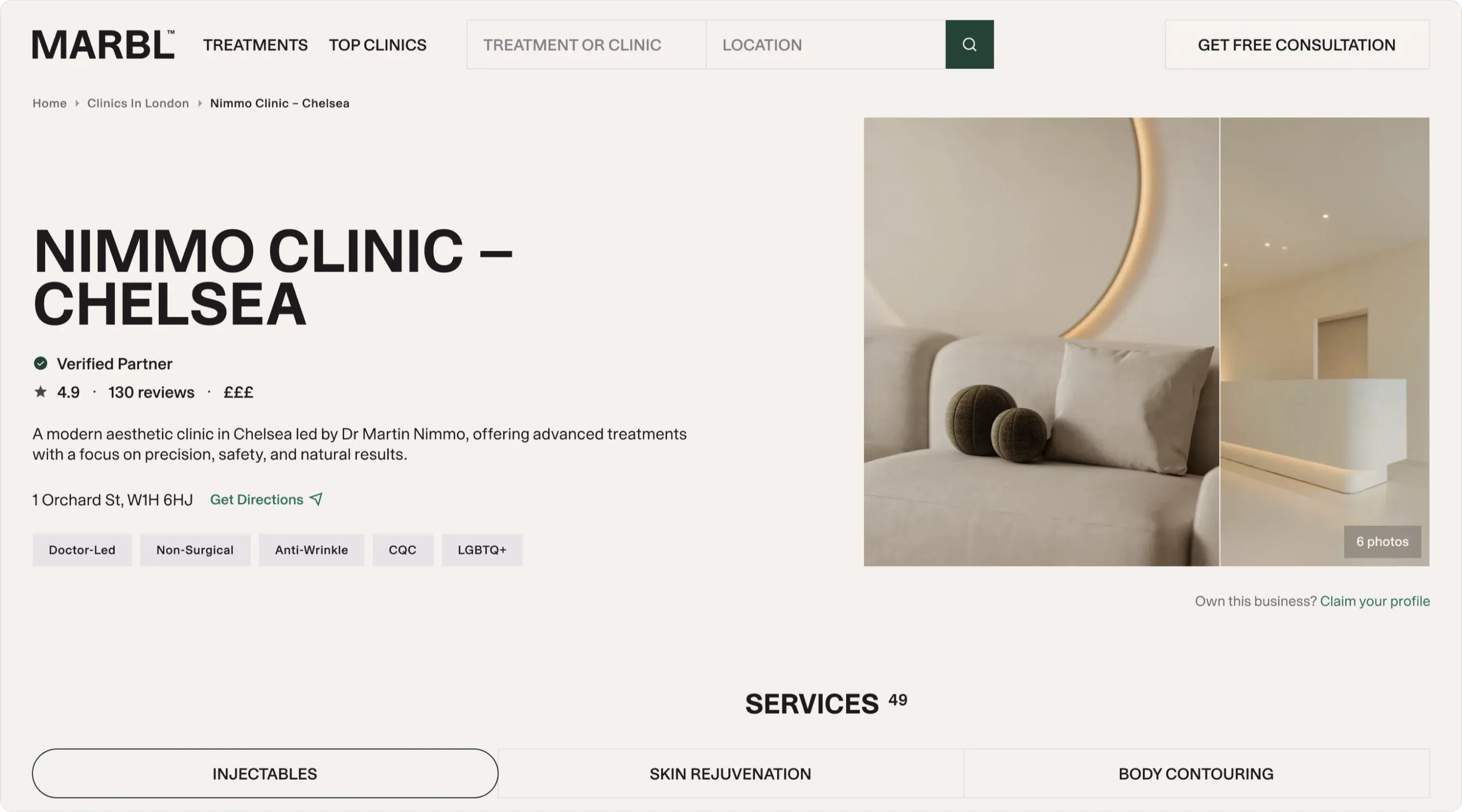
or message us directly and get help. Clinic vetting criteria appear as badges on cards and profiles, and Hotjar
session recordings showed users checking them right before tapping “Book”.
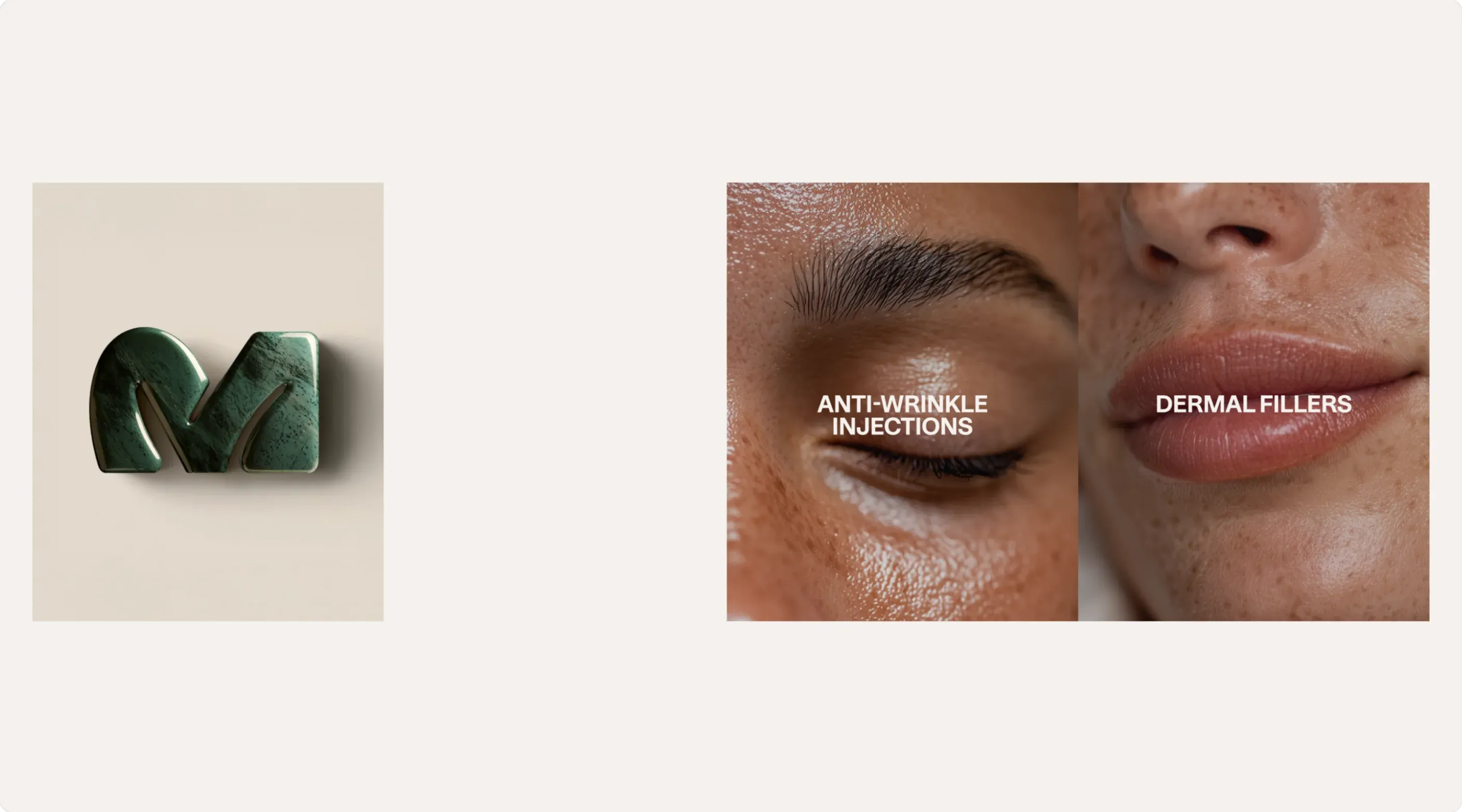
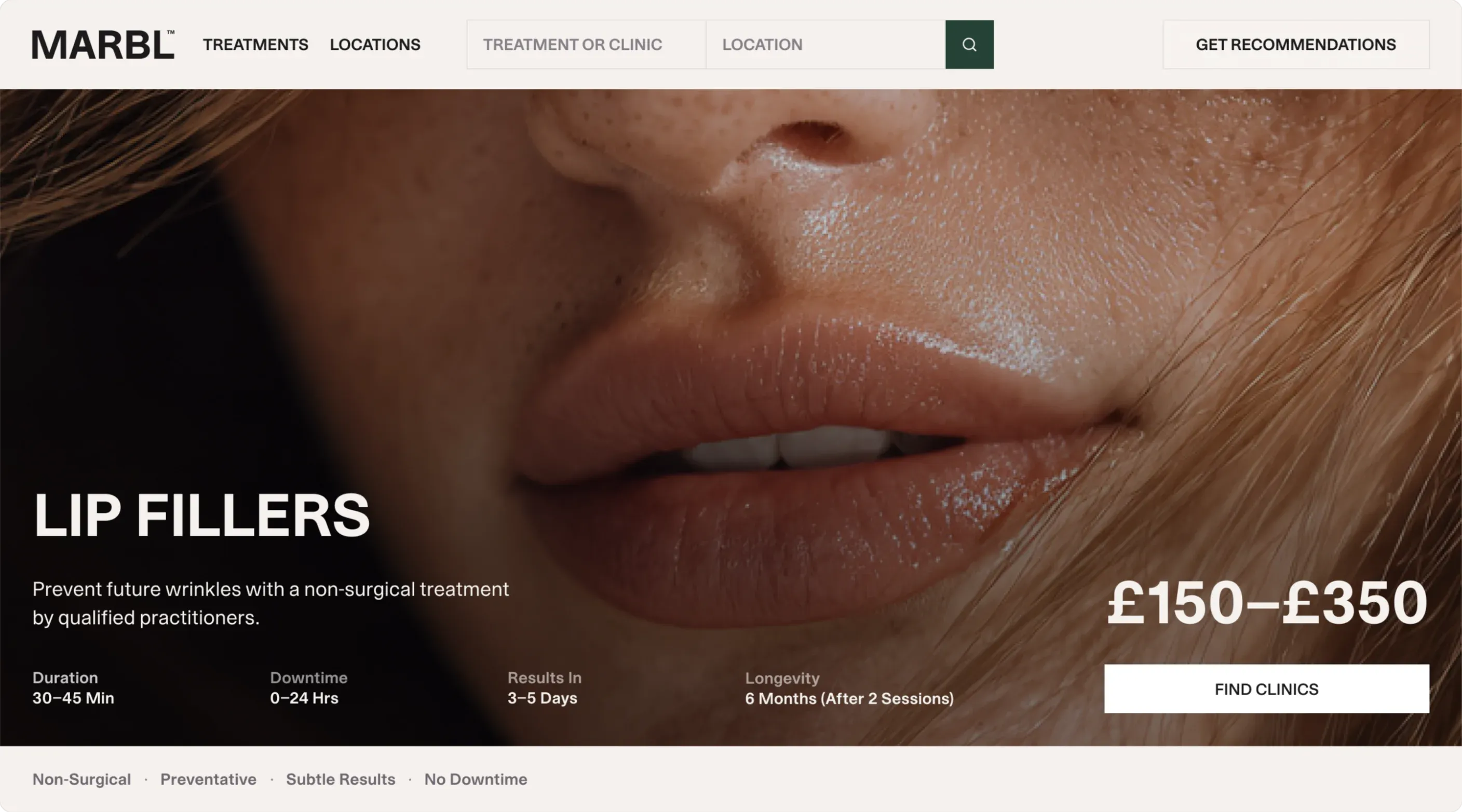
Instead of photo shoots, I built a consistent photo system in Midjourney: realistic treatment and clinic scenes
in one style that don’t look like stock. New visuals took hours instead of weeks and kept up with every product
change.
Every change started as a hypothesis with a metric: I worked with Hotjar on an ongoing basis, synced with
analytics and sales, and ran A/B tests across key flows. Two token-based design systems let one designer keep pace
with the whole team. Service and location landing pages were assembled from ready-made components and became the
foundation of our SEO.
Results
The marketplace grew on organic traffic with no marketing budget. All channels convert above the industry average:
direct booking turns 1.05% of visits into enquiries, and the quiz 11.2%.
Takeaways
As the lead designer, I learned to treat design as an investment: every decision should move a metric, and the
system should survive changes in strategy and even audience. My conclusion is that a professional designer with AI
tools can and should cover all of a product’s design needs.
E by ADPView Next